Friday, October 21, 2016


Where Did All The Little Girls Go?

Toddler, Eden Wood - Contestant
 Since Halloween is right around the corner, I decided that I would share a horror story with you.  However, this is a story where the horror continues to manifest itself every day of the week, month and year.  If anyone has ever watched TLC’s cable TV show Toddler’s and Tiara’s you know what I am talking about.  If you haven't, be prepared to scream and spill your popcorn in terror.  This is a show were little girls (and sometimes boys) as young as 3 years old are required to dress up this their finest stripper wear, cake makeup on their face, glue on false eyelashes, wear a mile-high hair wig, a flipper (fake teeth), a false tan and most recently, breast and butt padding to enhance the look.  All so that they are properly prepared to strut out on stage in front of family, strangers, and millions watching from their viewing devices to perform sexually suggestive dances and mannerisms, and then allow themselves to be rated on their beauty, body, and adult-like falseness.  I personally would classify this as a horror story/narrative that is becoming part of our public pedagogy! ... Scream here…!
 You might ask yourself, why are we cultivating this narrative? What is the reward for the performers of this narrative? And where’s the harm?  While not everyone will have the same perspective as myself, I will try to answer the “why, what, and where questions” as I see it.  First, how many of us have decided that our own baby, or niece/nephew, grandchild is the most beautiful creature on earth?  Far more beautiful than any other child out there?  Sure, those other kids are cute, but they don’t come anywhere close to the beauty of our little babies.  Of course, we are looking through a special filter lens called “love.”  That’s why they are also known in society as our “loved ones.”  This filter only see’s the beauty of our little loves and prejudices us to some extent against the looks and character of others.  The problem is, sometimes we get carried away with our adoration, and believe that the whole world must agree with us that our child is the prettiest.  Sometimes, our own insecurities, carried with us throughout our lifetime, are now being reflected on this defenseless child who is too young to know what expectations are being placed on them, and we insist that the world finds our child the prettiest so that we can secretly (or not so secretly) say, “this child is a part of me, if they have value in the world’s lens, then so do I.”  Enter now into this narrative a money-making industry that sees an opportunity to rake in the riches while creating a public pedagogy that leaves us poor in value. Thus a scary narrative is born.  Of course, once the money-making industry becomes involved, the motivation for participating in this narrative can change.  Now parents see their own special little money tree.  If they keep shaking the tree hard enough they can find riches and maybe even a little fame!  Shake, shake, shake.
 So, now that I have answered a little bit about how this public pedagogy has begun, I will discuss what possible rewards may be found in this narrative. The prior paragraph touched on some of the rewards: building self-esteem for the adult pushing this narrative, desire for money and fame, capitalism finding a new source to tap into.  But it is also the glitter and glamour of a six-foot tall trophy, a princess tiara, and most insidious, finding a way to fit into a dominant culture that has set beauty of face and form as the “ultimate” in success.  The very title given to recipients substantiates this statement.  For example: Mini Supreme, Grand Supreme, and Ultimate Supreme Princess and Queen.  Each contest group has its own set of titles to indicate the grandiosity of the child’s face and form that say’s “you are acceptable to us,’ or “you now have a place within the dominant culture, ” -- even if it is really a sub-culture of the dominant culture.  It’s the tiaras and trophies that put sparkles in the eyes of the child participants, and there is always one major prize that all the children want – but only one can have -- it might be a motorized mini-car, a life-sized doll, a trip to Disneyland – this is what keeps the child performing even when they are sick of the painting and teasing, pushing and prodding.
Eden Wood in Talent portion
 And finally, what’s the harm?  Ask Brooke Breedwell, a former child beauty star who now says, 'Since I was three I was pressured by mother to be perfect', and reveals that she hated being a pageant queen. (http://www.dailymail.co.uk/femail/article-2203230/Brooke-Breedwell-reveals-hated-young-pageant-queen.html)  The harm is a generation of little girls growing up being ultra-conscious of their physical appearance and poor body image.   Its children growing too old at the age of 16 and having self-identity issues.  It’s the loss of a childhood spent playing, using imagination, getting dirty, building character.  It’s the objectification of children being displayed for the commercial entertainment of others, and exposed to the dangers of pedophilia as they shake their little booties to earn points.  It’s the pre-teen girls with eating disorders, self-esteem issues, and the inability to befriend others without competing with them.  It’s the girls growing up with “The Princess Syndrome” in which they are constantly striving to achieve the unattainable goal of perfection.  It’s the early stress and pressure.  It’s their education, social activities, and sleep being set on the back burner for the sake of practicing for the never ending beauty pageants.  Its growing up wondering if you are only loved for your ability to “out-beauty” everyone else and there is nothing else lovable about you.   It’s the little girls with beautiful minds and character growing into shallow, unsociable adults.  And finally, it’s a public pedagogy being formed that is opposite of what we know to be healthy for our society.  It is a horror story that will leave a residue of evil in its wake for decades to come. 
 That’s my Halloween horror story for you this October.  Sleep wellBOO!


Thursday, October 20, 2016

October Blog Post


My favorite thing we have discussed so far was the movie Mickey Mouse Monopoly. It was the one thing that resonated most with me because I grew up watching these movies over and over again. Personally I felt that the scholars in this documentary read far too much into the messages of these movies than they should have. As a child it gave me something to believe in and expanded my imagination. I didn’t know the difference between characters due to their race. The characters were different because of their personalities and behaviors, not because they sounded like black people or Mexicans.

The one line that amazed me most was of the child who was at the mall with his mother and shouted that a group of black children playing and laughing “were” the hyenas. Of all the critiques on feminine sexuality and race this comment was the most outrages. In the Lion King the hyenas fall backward with laughter and are so extremely exaggerated that I couldn’t believe this child’s mother agreed with him. The hyenas spit and have trouble breathing from all the laughter, they basically choke from it. The scholar said it was a friend of hers and that she tried to correct her son’s perception but I have a hard time believing a child could make that connection from watching a movie.

I was astounded that these scholars were being so defensive against Disney movie characters. The Siamese cats, monkeys, and dogs were nothing more than interesting characters that added some excitement to the movies. In Aladdin, when the princess takes the apple for the child to eat, the writers aren’t going to display that it’s actually okay in real life; they want to cause suspense in order to caption their audience. I doubt there was any harmful intent in scenes like that; it’s all for the sake of giving a child some magic to believe in. I also don’t think that children watching that movie associated people of their kind to be hostile and merciless. We want to teach our children not to let others prejudice against us cause us shame or be prejudice towards other because its hurtful but that comes from talking with our children and leading by example, not watching movies for mere entertainment.  

Monday, October 17, 2016

October Blog Post - Doug Mason

In the month of October, collectively as a class we have accumulated tons of useful information based off of many important subjects, and critical readings to accompany those topics. One of the most present topics to come by this semester is the idea of media in our culture. Media affects our culture more than any other generations before us, because of all of the advancements and the new technology that aids us in educational and recreational purposes. However, is media helping or hurting our culture? When speaking in terms of how much media is involved in our lives, all we have to do is look down at our mobile device in our hands. Which is ironic because usually if you look around during the day the majority of people you see, will be looking down at their phones. Media does help us in a sufficient amount of ways, including giving us estimations on the weather, what clothes to buy, and even an influence on who to vote for. Some may say these are positive additives to our culture as the human race, but others may disagree and say there is too much external noise affiliated with media involved in our everyday life. The sentence I am using for this blog post that sparks an interesting idea is a quote seen in the textbook, “Media surrounds us, but they are also constantly changing...but to use media, one must change when media changes to effectively use it for our benefit collectively as humans.” An example of this noise I was referring to, is seen in our textbook titled, "Communication: A Critical and Cultural introduction". A term referred to as, “co-constituition” portrays to the reader how much media is involved in our culture today. It can be defined as, “we use and create media even as media use and create us” (Warren & Fassett, 2011, pg. 165). An example of this would be how even when we try and escape media, and the noise that accompanies it, in a statewide emergency, media benefits the user. The example the book uses to describe this would be when there is a tornado warning, we need the media to let us know when the storm is going to hit, and when the storm will pass and we can safely venture outside once again. This concept proves that media’s stronghold is communicated throughout the world, in our culture and other cultures abroad.  
            Even though there is some negative light on media and the new advances made in terms of technology and the social aspect of it, media plays a vital role in communicating cultures. Without media, other cultures and countries would have no idea what people from other places of the world look like or sound like. We as a society would not know when there is a natural disaster on the other side of the globe, and because of media, we get the opportunity to help certain countries with donations as well. A perfect example of using media for a good cause for our world’s wellbeing was seen in "Communication: A Critical and Cultural introduction". Al Gore (our former vice president) released a documentary in 2006 discussing the reality of climate change and solutions to slow the rate of snow melt and rising temperatures. Based off of this documentary and many others after it, we as a society know what the term “carbon footprint” means and some ways to slow the rate of climate change on an individual level. This is all because of media’s influence in our everyday life. In this way, “media shapes a culture even as we, as members of that culture, use media to serve our needs” ("Warren & Fassett, 2011, pg. 164).


Tuesday, October 4, 2016

September Blog Post

Jessika Ruggles

Comm 160

Blog Post

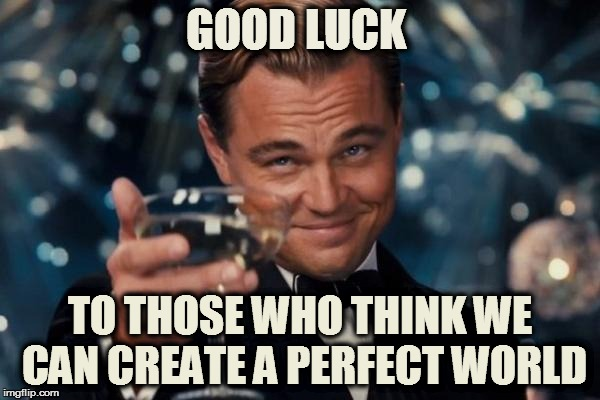
The statement that I chose to talk about was “We believe that is is our ethical responsibility to advocate for the world as we wish it to be, a world that desire the best of us all.” I chose this sentence for my first blog post because it relates to current world issues. From the current political debates to the all lives matter issue it is our responsibility to make the world to a better place. There are two things that I want to relate this to, that come directly come from class. The first coming from the BBC documentary, it said that you see things in the context of your own life. I think that this is very important in explaining how I feel about this sentence and the correlation to the documentary. Everyone has a different view of the way the world should be and function but who is right? In this situation not one person is right and so I don’t think that the world will ever be as we wish it. What is good for one person isn’t good for another based upon people coming from different backgrounds and cultures and having their own believe system. Realizing this, I don’t think that the world can ever experience peace. With so many different individuals believing what is ethically and morally right for them and the people around them, I don’t think that we can ever actually come to an agreement. The second idea that I want to take from the document, is that perspective is in the eye of the individual. This also relates to my first correlation because if someone is finally happy where things are going but another is not, it is all in the perspective. I don’t think that there can ever be a world that is best for all of us, because we are all culturally different in many ways. The meme that I chose, everyone can relate to or at least understand. Leonardo DiCaprio is a major actor icon that is known to most, if not all people for many different reasons, hence why I chose him for my meme.